
The Marvel Cinematic Universe has never lacked gods, monsters, or apocalyptic threats. But few concepts are as chilling — or as philosophically dangerous — as the idea that the universe itself is watching… and preparing to pass judgment.
That is the shadow hanging over the rumored continuation of Eternals, a sequel often dubbed “Eternals 2: Judgment of the Stars.” And if the first film was about discovery, the second — if it ever arrives — would be about reckoning.
Not just for humanity.
But for the gods who created its protectors.

Not a War for Earth — A Trial for Its Right to Exist
This wouldn’t be another alien invasion movie. No portals over New York. No armies clashing in daylight. Instead, the conflict would unfold on a scale that feels colder, quieter, and far more terrifying: a cosmic audit of human worth.
Arishem doesn’t attack Earth. He evaluates it.
Every war. Every act of cruelty. Every moment of compassion. The entire history of civilization reduced to data points in a Celestial algorithm designed to decide whether planets deserve to continue breathing.
For the Eternals, that realization would shatter their last illusion: they were never guardians. They were observers in an experiment.
And experiments, when they stop being useful, are erased.

Sersi: From Idealist to Accidental Revolutionary
Sersi has always loved humanity not because it is powerful, but because it is fragile. In Judgment of the Stars, that compassion would no longer be enough. She wouldn’t just defend humans emotionally — she would be forced to challenge the cosmic order itself.
But rebellion against gods isn’t heroic.
It’s suicidal.
Leading a divided group of immortals who no longer trust their creators — or each other — Sersi would find herself making decisions that mirror the very Celestials she despises: calculating losses, choosing which lives are strategically acceptable to sacrifice.
At some point, saving humanity may require becoming something terrifyingly inhuman.
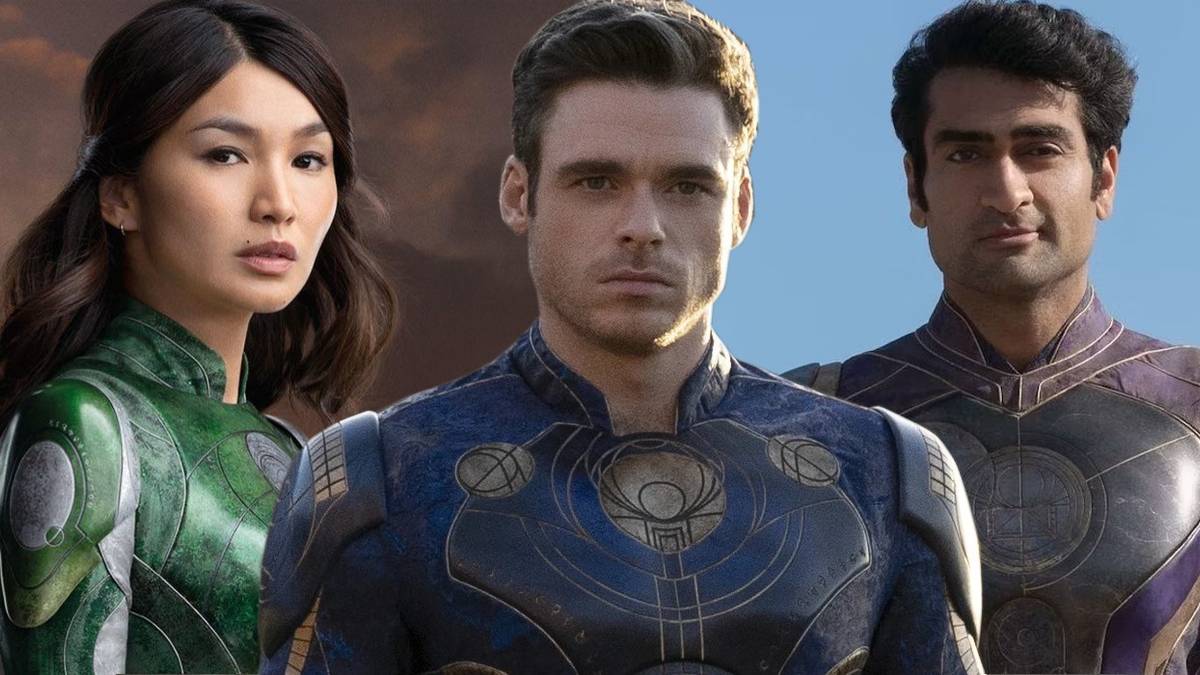
Thena and the Price of Forbidden Memory
If Sersi becomes the political heart of the story, Thena becomes its spiritual horror.
Her fractured mind, once treated as tragic instability, could be revealed as the side effect of remembering too much. Hidden truths about the Celestials. About past civilizations that also stood trial — and failed.
Her memories wouldn’t be visions.
They would be evidence.
And that evidence would suggest something far more disturbing than judgment: that the Celestials have rewritten reality before, eliminating entire species who questioned their authority.
Thena’s power, then, wouldn’t simply be martial. It would be narrative. She would carry the universe’s suppressed history — and exposing it might destabilize the cosmic hierarchy itself.

Immortality as a Negotiation Tool
Perhaps the darkest twist of Judgment of the Stars would be the realization that the Eternals’ immortality isn’t permanent. It is conditional. Revocable. Programmable.
What if Arishem’s final offer isn’t destruction… but trade?
Humanity survives.
But the Eternals are erased.
No rebirth. No memory transfer. No celestial backup files.
Just extinction — in exchange for a planet.
Suddenly, the question isn’t whether the heroes can win.
It’s whether they are willing to stop existing so that everyone else can.

Why This Story Feels Dangerous — and Necessary
In a franchise dominated by multiversal resets and reversible deaths, Eternals 2 represents something the MCU rarely commits to: permanent consequences.
Not timelines collapsing.
Not variants replacing fallen heroes.
But actual, irreversible loss.
And that’s precisely why the story still haunts fans.
Because it dares to ask something uncomfortable:
What if the universe doesn’t care about justice — only efficiency?
And what if heroism isn’t rewarded with survival?
A Sequel That Could Redefine Marvel’s Cosmic Tone
If Judgment of the Stars ever reaches the screen, it wouldn’t just be another chapter. It would be a tonal shift — closer to existential sci-fi than superhero spectacle. Less about destiny, more about defiance. Less about victory, more about choosing how you lose.
Not with a triumphant explosion.
But with quiet, devastating sacrifice.
And in a cinematic universe obsessed with saving the day, that might be the most radical ending of all.